

Screener Accreditation Scheme – What Aviation and Maritime Screeners Need to Know
Aviation and maritime security screening roles operate within some of Australia’s most highly regulated security environments. People performing screening functions at airports, air cargo facilities, cruise terminals and ports must meet nationally defined requirements before they are permitted to make independent screening decisions.
One of the most important of these requirements is screener accreditation. Screener accreditation forms part of the Australian Government’s Screener Accreditation Scheme, administered by the Department of Home Affairs, and applies to individuals performing regulated aviation, maritime and air cargo screening functions.
This article explains how the Screener Accreditation Scheme works, who it applies to, and how it fits into the pathway from training to employment. It is intended for prospective screening officers, air cargo examination officers, employers, and anyone considering training in aviation or maritime security who needs a clear, accurate understanding of accreditation requirements.
What Is the Screener Accreditation Scheme?
The Screener Accreditation Scheme is a national framework implemented across the aviation, maritime and air cargo sectors to ensure a consistent, high standard of transport security screening across Australia.
Under the Scheme, individuals performing regulated screening functions must meet a defined set of requirements, including:
- holding the appropriate qualification,
- completing employer-provided on-the-job training,
- undertaking continuing professional development (CPD), and
- successfully completing annual accreditation testing for the screening functions they perform.
Screener accreditation is a workplace-based authorisation. It is not a qualification and it is not a security licence. Accreditation confirms that a screening officer or air cargo examination officer has demonstrated competence to perform specific screening functions or screening powers in an operational environment and is authorised to perform those functions independently.
Accreditation can only occur once a person is employed or engaged by a regulated entity and has completed the required training and workplace preparation. It cannot be obtained independently and does not replace the requirement to complete nationally recognised training.
Who Requires Screener Accreditation?
Screener accreditation is required for individuals performing regulated screening functions under Australia’s transport security legislation.
In aviation environments, this includes screening officers responsible for activities such as passenger screening, carry-on and checked baggage screening, screening into security restricted areas, and other regulated screening functions at airports.
In maritime environments, accreditation applies to screening officers conducting passenger screening, access control screening, or other regulated screening activities at ports, cruise terminals and on regulated Australian ships, where a screening notice applies.
In air cargo environments, air cargo examination officers performing regulated examination functions may also be required to meet the requirements of the Scheme, particularly where enhanced examination methods are used. Some Scheme elements may not apply where only baseline examination methods are conducted, depending on the employer’s regulatory notice.
Screener accreditation applies only to regulated screening or examination functions. It does not apply to general security duties that fall outside aviation, maritime or air cargo transport security requirements, even where those duties are performed within transport environments.
Training and Qualification Requirements
Before undertaking screener accreditation, individuals must complete the appropriate nationally recognised qualification aligned to their screening role. For most entry-level aviation, maritime and air cargo screening roles, this is the Certificate II in Transport Security Protection (Cert II TSP).
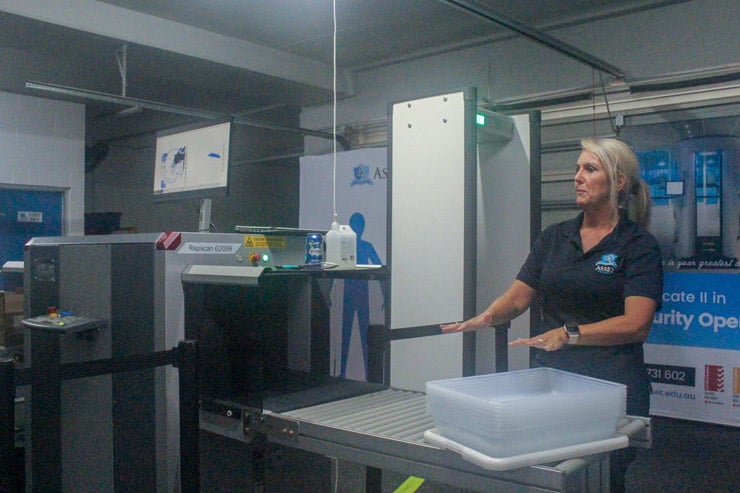
The Certificate II in Transport Security Protection is an industry-developed qualification designed specifically for screening officers and air cargo examination officers. It provides the foundational knowledge and practical skills required to perform regulated screening functions, including controlling access to security-sensitive areas, conducting physical searches, using screening and examination technologies, and identifying prohibited items and threats.
Completing the Certificate II is a mandatory prerequisite for most new entrants to regulated screening roles. However, completing the qualification alone does not authorise a person to make independent screening decisions. Accreditation testing can only occur after employment and completion of required workplace-based training.
Transitional arrangements apply for individuals employed in screening roles prior to the introduction of the Scheme. These arrangements vary by sector and are governed by sector-specific determinations and notices.
Employer-Based On-the-Job Training (Minimum 40 Hours)
After completing the Certificate II and commencing employment, screening officers and air cargo examination officers must undertake a minimum of 40 hours of supervised on-the-job training provided by their employer before attempting accreditation testing.
On-the-job training is a mandatory requirement under the Scheme and is designed to ensure screeners can apply their qualification-based knowledge in their specific operational environment. This training must be tailored to the organisation’s local operating context and the screening functions performed by the individual.
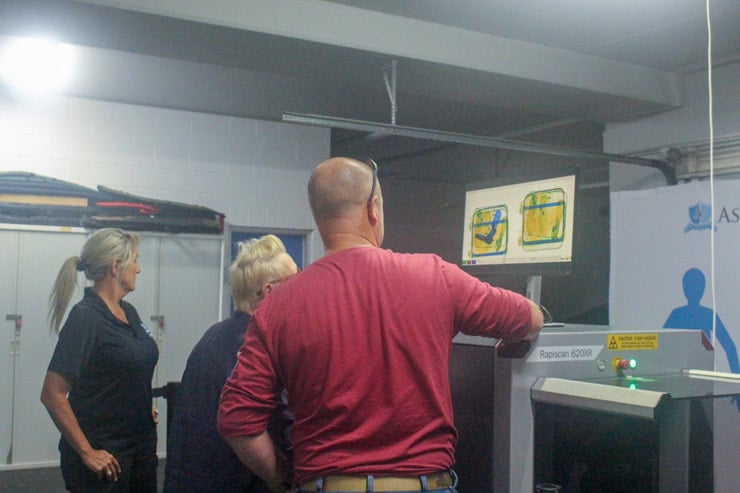
Workplace training may include supervised practice at live screening or examination points, familiarisation with screening or examination equipment used at the site, X-ray image interpretation training, and instruction on local procedures, layouts, and regulatory obligations. The purpose of this training is to ensure readiness for independent screening decisions prior to accreditation testing.
On-the-job training may commence once employment begins and can be undertaken in parallel with completion of the Certificate II, however both must be completed before accreditation testing can occur.
The Screener Accreditation Process
Screener accreditation occurs once an employer is satisfied that the screening officer or air cargo examination officer has completed the required qualification and on-the-job training.
Accreditation is achieved through annual accreditation testing, which must be successfully completed before a person can make independent screening decisions. Accreditation testing is arranged by the employer and is administered by accreditors appointed by the Department of Home Affairs using approved testing platforms.
Accreditation testing is conducted for each screening function or screening power performed. Tests may include workplace practical assessments, X-ray image interpretation tests, or a combination of both, depending on the function being accredited.
Accreditation is granted only for the specific screening functions that have been successfully tested. Individuals may work only within the scope of the functions for which they hold current accreditation.
Function-Specific Accreditation
Under the Screener Accreditation Scheme, accreditation is granted on a function-by-function basis, rather than as a single approval covering all screening duties. Screening officers and air cargo examination officers are required to hold current accreditation only for the screening functions or screening powers they perform as part of their role.
It is possible for an individual to be accredited in some screening functions but not others. For example, a screening officer may hold accreditation for body scanner operations and physical search procedures but not yet be accredited for X-ray image interpretation. In this situation, the officer may continue working in the functions they are accredited for, but must not make independent screening decisions in functions for which accreditation has not yet been achieved.
If an individual fails an accreditation test, they may continue working under supervision or in other accredited functions. Failure of an accreditation test does not prevent employment, but it does restrict the screening functions that can be performed independently until the relevant accreditation test is successfully completed.
Working Across Different Screening Environments
The Screener Accreditation Scheme supports movement across different regulated transport security environments. Where a screening officer or air cargo examination officer already holds the Certificate II in Transport Security Protection, there is no requirement to complete another Certificate II qualification when moving between aviation, maritime or air cargo screening roles.
However, individuals must complete accreditation testing for any screening functions or screening powers they have not previously been accredited to perform. This ensures competence is demonstrated for the specific tasks, equipment and regulatory requirements associated with the new role or environment.
Some Scheme requirements apply only in certain contexts, such as where enhanced air cargo examination methods are used or where a maritime screening notice applies. Employers are responsible for determining which Scheme elements apply based on their regulatory obligations.
Ongoing Obligations and Maintaining Accreditation
Once accredited, screening officers and air cargo examination officers must meet ongoing obligations to maintain their accreditation.
All screeners are required to successfully complete annual accreditation testing for each screening function or power they perform. Accreditation testing must be completed each year to maintain authorisation to make independent screening decisions. Where accreditation lapses or testing is not successfully completed, the individual must work under supervision or cease performing that function until accreditation is restored.
In addition to accreditation testing, screeners must complete a minimum of 12 hours of continuing professional development (CPD) per year, commencing from the date of their first successful accreditation test. CPD activities must be relevant to the screening functions performed and may include refresher training, updates on screening equipment, or briefings on emerging threats and concealment techniques.
Employers are responsible for managing and recording compliance with accreditation and CPD requirements. Asset College can support employers and screeners by delivering training programs that contribute to CPD obligations.
Asset College’s Role
Asset College delivers nationally recognised aviation and maritime security training aligned to the Screener Accreditation Scheme and Australia’s transport security regulatory framework.
Asset College’s aviation and maritime trainer/assessors are also appointed by the Department of Home Affairs as accreditors. However, Asset College’s primary role is the delivery of accredited training. Employers remain responsible for arranging and managing screener accreditation testing for their personnel.
Where an employer requires an independent external accreditation service, Asset College recommends contacting The Accreditation Group, which specialises in workplace-based screener accreditation services.
Asset College does not issue screener accreditation, ASICs, MSICs or security licences. These approvals are issued by employers or relevant government authorities in accordance with legislative and regulatory requirements.
Common Misunderstandings About Screener Accreditation
A common misconception is that completing a training course automatically results in screener accreditation. While the Certificate II in Transport Security Protection is a mandatory foundation, accreditation is a separate workplace-based process that occurs after employment and on-the-job training.
Another misunderstanding is that accreditation applies to all screening duties at once. In practice, accreditation applies only to specific screening functions and must be maintained through annual testing.
Screener accreditation is also sometimes confused with identity cards or security licences. Most screening roles require an ASIC or MSIC, which must be held and properly displayed while on duty, and screeners must wear a recognisable and distinct uniform when performing public-facing screening duties. These requirements are separate from, and do not replace, screener accreditation.
Summary: The End-to-End Pathway to Screening Roles
Working as an aviation, maritime or air cargo screener involves a structured pathway designed to maintain consistent national screening standards.
This pathway typically includes completing the Certificate II in Transport Security Protection, gaining employment with a regulated entity, undertaking supervised on-the-job training, and successfully completing annual accreditation testing for specific screening functions. Ongoing accreditation is maintained through annual testing and continuing professional development.
Understanding the distinction between training, employment and accreditation helps screening officers and employers meet regulatory requirements and supports safe, lawful and effective transport security screening across Australia.
ASIC, MSIC and JobReady Explained
Aviation and maritime security roles in Australia operate within a tightly regulated national security framework. Aviation Security Identification Cards (ASICs) and Maritime Security Identification Cards (MSICs) are a core part of that framework and are required for individuals who need access to secure areas of airports, ports and other transport security environments.