
Introduction
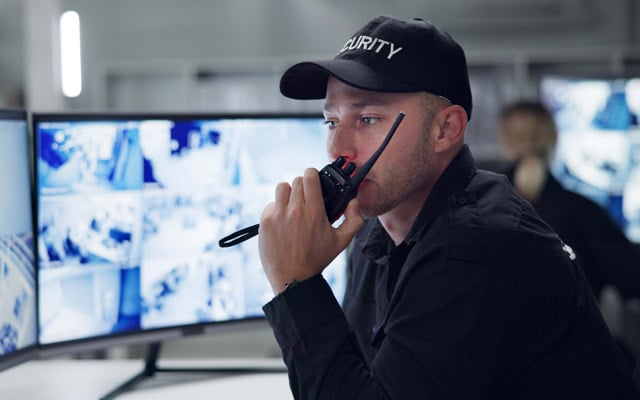
Many people search for a “security course online” hoping to complete the training required for a security licence without attending a classroom. It’s an understandable assumption – online learning has expanded rapidly across many industries, and theory-based qualifications can often be completed remotely.
However, security licensing courses in Australia cannot be completed entirely online, including the Certificate II in Security Operations and the licensing units in the Certificate III in Security Operations. While some theory can be delivered online for convenience, the qualification relies heavily on practical, face-to-face training and assessment.
Security officers are required to communicate with real people, respond to real behaviour, use real equipment and demonstrate safe physical techniques. These capabilities cannot be validated through online-only assessment tools or video submissions.
This article explains why the practical requirements of security operations training make online-only delivery non-compliant, why choosing the wrong provider carries real risks and what a proper, compliant training experience should look like for anyone preparing to join the industry.
Why Licensing Courses Require Face-to-Face Training
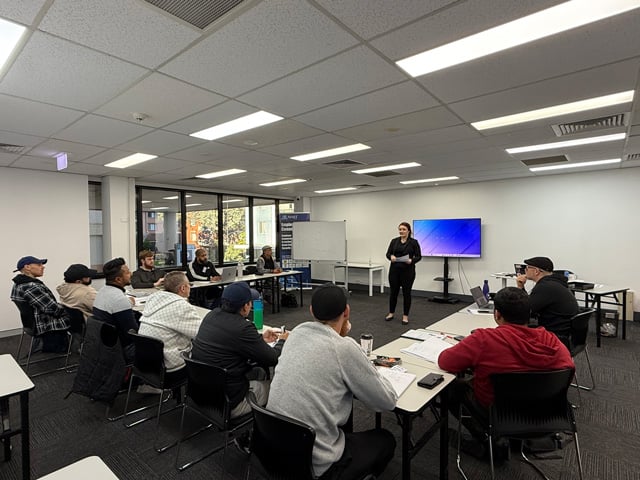
Security work involves interacting with members of the public, managing conflict, reading behaviour, making decisions under pressure and responding appropriately in unpredictable situations. These are practical skills that must be demonstrated live – not simulated through a computer.
Key components of security operations training depend on face-to-face delivery, including:
- communicating clearly with individuals and groups
- managing conflict, negotiation and de-escalation
- responding to aggressive or escalating behaviour
- using two-way radios, handheld metal detectors and other operational equipment
- applying situational awareness in changing conditions
- demonstrating safe defensive and disengagement techniques
- working effectively as part of a team during incidents
- receiving real-time feedback and correction from trainers
These skills require trainer supervision, peer interaction and repeated practice in realistic scenarios. They cannot be demonstrated or reliably assessed through an online module or webcam-based activity.
While online delivery can effectively support foundational knowledge – such as legislation, roles, responsibilities and reporting – competence as a security officer must be proven in person to satisfy industry, employer and regulatory expectations.
Regulatory Requirements Across Australia
Every Australian state and territory requires security licensing training to include supervised, face-to-face practical assessment. This is not a provider preference; it is a regulatory and training package obligation.
The national units of competency specify performance evidence that includes:
- direct interaction with others
- responding to unpredictable behaviours
- demonstrating communication and teamwork
- using security equipment correctly
- applying situational awareness and decision-making skills
- performing physical techniques safely
Licensing bodies expect RTOs to deliver training that reflects real workplace conditions. This includes minimum supervised hours, appropriate training spaces, realistic scenarios and assessments performed under qualified trainer observation.
Any organisation offering a “security course online” or “online-only Certificate II in Security Operations” cannot meet these requirements.
When training is delivered correctly, it prepares graduates for real duties. When it is not, qualifications may be issued without proper evidence – and that leads directly to the compliance risks discussed next.
Compliance Risks: What Happens When Training Is Delivered Incorrectly
Choosing a provider that delivers security operations training incorrectly can have significant consequences, often long after the course is completed.
Security licensing qualifications are tightly regulated. If an RTO fails to meet training and assessment requirements – such as offering online-only delivery, shortened courses or inadequate supervision – ASQA may determine that the qualifications issued are invalid.
ASQA’s compliance priorities include:
- online delivery of practical qualifications
- shortened or “fast-tracked” courses
- inadequate assessment conditions
- insufficient evidence of practical competence
When ASQA finds that an RTO has not delivered a course properly, certificates can be cancelled – even if they were issued years earlier and the student had no knowledge of the provider’s non-compliance.
For security officers, this can lead to:
- immediate suspension or cancellation of their security licence
- loss of employment
- the need to retrain and reapply for a licence
- significant disruption to income and career stability
Security licensing is built on trust and competence. Invalid training puts both at risk.
Did You Know? (Important Compliance Warning)
In 2025, ASQA cancelled more than 30,000 certificates issued by providers that failed to conduct proper training and assessment. Many of these cancellations related to online delivery of qualifications that required face-to-face components or courses delivered in unrealistically short timeframes.
These cancellations affected former students from multiple years – not just current learners.
For those working in the security industry, this meant:
- their qualification was declared invalid
- their licence was suspended or cancelled
- employment could no longer continue
- retraining was required before they could return to work
This highlights why selecting a compliant training provider is essential. A course that seems convenient or fast may place your licence – and livelihood – at risk long after completion.
What a Quality Security Training Experience Should Look Like
A properly delivered security operations course gives learners the opportunity to build confidence, practise real skills and receive meaningful feedback from experienced trainers. While some theory can be completed online for flexibility, the core training experience must be hands-on and supervised.
A compliant, high-quality program typically includes:
- Face-to-face practical sessions designed to mirror real workplace interactions
- Scenario-based activities that test communication, conflict management and behavioural awareness
- Team exercises that demonstrate coordination during incidents
- Safe instruction in physical skills, including defensive and disengagement techniques
- Use of security equipment, including two-way radios, handheld metal detectors and other operational tools
- Opportunities to practise situational awareness, observation and decision-making
- Clear, structured feedback from qualified trainers
- Assessment conditions that meet the requirements of the training package and licensing authorities
This type of training ensures graduates are prepared for the realities of the job – not just assessed on theoretical knowledge.
It also protects learners from compliance risks. When training is delivered properly, the evidence of competence stands up to regulatory scrutiny, ensuring the qualification remains valid throughout a person’s career.
Asset College’s Balanced, Compliance-Focused Approach
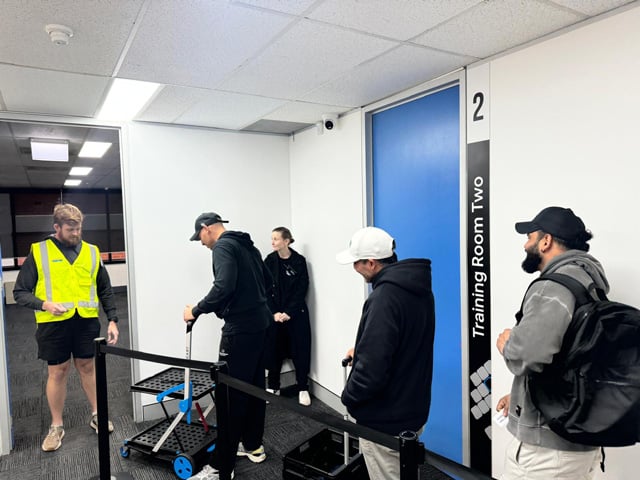
Asset College delivers security operations training using a model that maintains compliance while providing flexibility where appropriate. Some theory components – such as foundational knowledge, legislation and reporting requirements – can be completed online to support learners who balance work and personal commitments.
However, all practical components are delivered face to face, with classroom time focused on:
- realistic, scenario-based activities
- supervised practice of physical skills
- correct use of security equipment
- communication and de-escalation exercises
- assessment tasks that reflect real operational environments
This blended approach meets the requirements of licensing authorities and the national training package, while also ensuring that learners develop genuine, job-ready competence.
By structuring training this way, Asset College supports learner flexibility without compromising safety, regulatory obligations or the long-term validity of the qualification.
Choosing a Compliant and Reputable Security Training Provider
Selecting the right training provider is essential to protecting your future licence and employment. A reputable RTO will be transparent about its delivery model and will never offer online-only licensing courses, fast-tracked programs or assessment methods that do not meet regulatory standards.
When comparing providers, look for:
- Clear inclusion of face-to-face practical training, not vague or optional references
- Realistic course duration, allowing adequate time for developing skills
- Supervised, in-person assessments conducted by qualified trainers
- Regular use of equipment such as radios and metal detectors
- Opportunities for role-plays, scenarios and team-based activities
- A delivery model that aligns with training package requirements
- Transparency in how training is conducted, without shortcuts or unrealistic promises
- Long-standing registration and a history of compliance
- Connections with employers, showing industry confidence in the provider’s graduates
A provider that meets these standards protects your training investment and ensures your qualification stands up to audit and licensing checks long into the future.
Conclusion
Security licensing courses cannot be completed fully online in Australia, and the reason is simple: the role of a security officer is practical, people-focused and highly accountable. To meet the expectations of employers, licensing authorities and the community, students must demonstrate their competence through supervised, face-to-face training and assessment.
Online delivery can support some theory components, but any provider offering a fully online or fast-tracked Certificate II or III in Security Operations is not delivering training that complies with national standards. Choosing such a course may seem convenient at first, but the long-term risks – such as certificate cancellation, licence suspension and loss of employment – are significant.
When you train with a reputable provider, you can trust that your qualification, your licence and your future in the industry are protected. Proper security training equips you with real skills, ensures you meet regulatory requirements and prepares you for the realities of working with people in a dynamic, challenging environment.
If you’re preparing to begin your security career, choose a provider that delivers training the right way: practical, supervised, compliant and committed to developing confident, capable security officers.
How To Become a Full-Time Security Officer
The security industry continues to grow across Australia, driven by increased activity in retail, events, critical infrastructure, transport, health care and private sector organisations seeking stronger protective measures. While many people begin their careers working a mix of shifts, full-time opportunities are widely available for those who are well-trained, reliable and ready to step into professional roles.